
The three-section plate
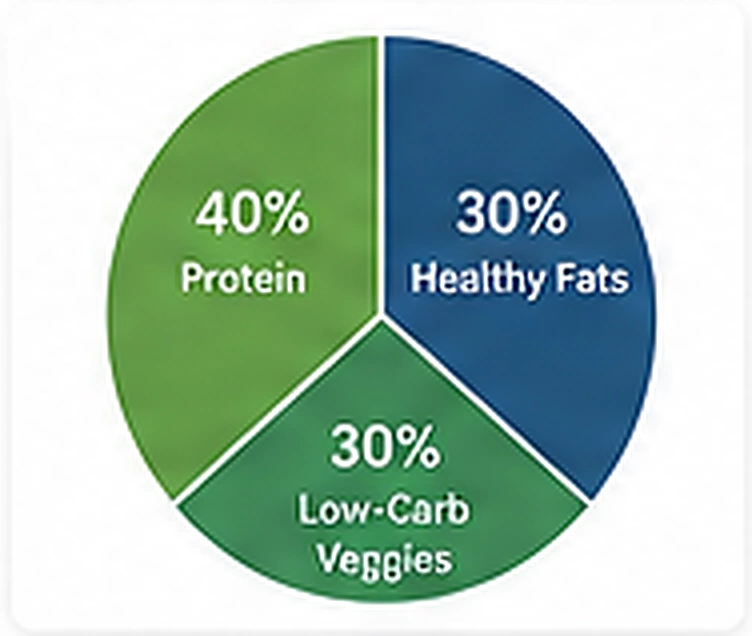
Picture a dinner plate divided into three general sections. This is a starting reference point, not a rigid rule, and it can flex depending on the meal and your own needs.
Half: non-starchy vegetables
Non-starchy vegetables - leafy greens, broccoli, peppers, zucchini, green beans, and similar foods - can generally fill about half the plate. They add volume, fiber, and nutrients without contributing much carbohydrate, which makes meals feel more complete.
A quarter: protein
A portion roughly the size of your palm - eggs, poultry, fish, meat, tofu, or another protein source - fills about a quarter of the plate. Protein tends to help meals feel satisfying, which supports consistency over time.
A quarter or less: carbohydrate-containing foods
The remaining space is for carbohydrate-containing foods if you are including them - a smaller portion of rice, potato, whole grain, or fruit, for example. The goal is a smaller portion relative to a typical plate, not necessarily zero.
Why this works without counting
Because carbohydrate-containing foods raise blood glucose more directly than protein or fat, shifting the visual balance of the plate - more vegetables and protein, less refined carbohydrate - tends to move overall intake in a lower-carb direction without requiring a food scale or an app at every meal. It is a consistency tool, not a precision tool.
Making it repeatable
Reuse a small set of meals
You do not need a new meal idea every night. Picking a handful of dinner patterns you can rotate - built around this same plate structure - reduces daily decision-making and makes grocery shopping simpler.
Adjust for real life
Restaurants, family meals, and social events will not always match this structure exactly, and that is expected. Applying the same general idea - more vegetables and protein, a smaller portion of refined carbohydrate - even loosely is more useful over months than being precise for a few days and then stopping.
When to get more specific guidance
If you are managing diabetes, take glucose-lowering medication, or have another condition that affects how your body handles carbohydrates, ask your healthcare professional whether this general approach is appropriate for you and whether any portion sizes should be adjusted for your situation.
What to do next
The free 7-Day Starter applies this same plate-building approach to a full week of breakfasts and dinners, along with a grocery list, so you can see the method in practice rather than building every meal from scratch.